Close X

Enter a search request and press enter. Press Esc or the X to close.

We’ve all been there. You’re knee-deep in the last episode of the latest binge-worthy series and your dog (or cat!) won’t stop scratching. And chewing and scratching … what the heck!? So you shine a little iPhone light on the situation, and there it is. A swiftly moving black dot. They are the bane of our existence, but our disgust probably pales in comparison to how our pets feel. These little wingless vampire monsters can leave red, swollen, and “intensely” itchy bites, particularly to pets who are allergic. Those tiny bites can even lead to hair loss! There’s not much worse than a flea infestation. There are more than 300 species of fleas in the United States and they don’t just wreak havoc on our pets; they can also bite humans causing welts, fever, and even blisters.

Fleas live in warm, humid environments – think carpet, upholstery, and soil, especially in shady areas such as under a leaf. Here in Georgia, fleas can be active year-round. They hop from animal to animal, which is particularly vexing for families with pets at an apartment complex. Going up and down the stairs, in and out of entrances where other pets go, and even to a dog park can lead to your pet picking up fleas. Fun fact: fleas prefer to land on the head and neck area of cats and the rump and tail area of dogs.

The good news is that there are all kinds of remedies for flea bites, like aloe vera gel for humans and flea shampoo and a warm, soapy bath for pets. Start at your pet’s head and work your way back so the little buggers aren’t hopping to the ears and face of your pet’s head! Google ‘flea bite treatment’ and you’ll find a slew of home remedies. But there is one thing that trumps them all: PREVENTION.

Just ask anyone their number one regret after they deal with a flea infestation. They wish they had used flea prevention (oftentimes combined with tick prevention). Readily available from vets or pet stores, effective prevention can avoid discomfort, irritation, and all the side effects that come with fleas, including some severe and chronic illnesses. The best news? Preventing fleas is considerably less expensive (and frustrating) than treating an infestation. According to VCA Animal Hospitals, “There are many [flea prevention] products on the market. Some are over-the-counter and some are prescription. Some are stand-alone products and some are in combination with other treatments/medications. Some are applied to the skin, some are worn as a collar, and some are given by mouth (orally). Some are given daily, some are given monthly, and some can last for several months. Depending on your lifestyle, your pet’s lifestyle, and your needs and preferences, your veterinarian will help you choose a product that works best for you and your pet.” There are so many choices! After reading the product labels carefully and administering your chosen prevention, do watch for any side effects or adverse reactions.

What’s next? Talk to your vet and do a little investigating; your pets will thank you!
May 25, 2023

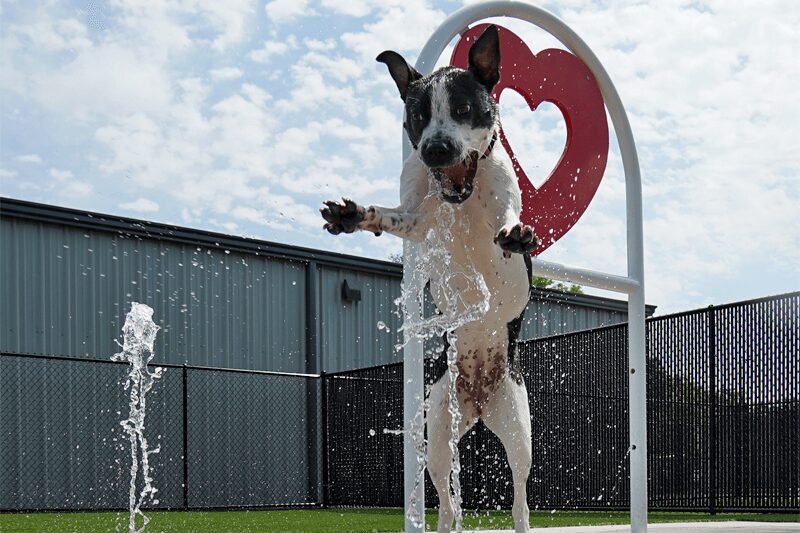
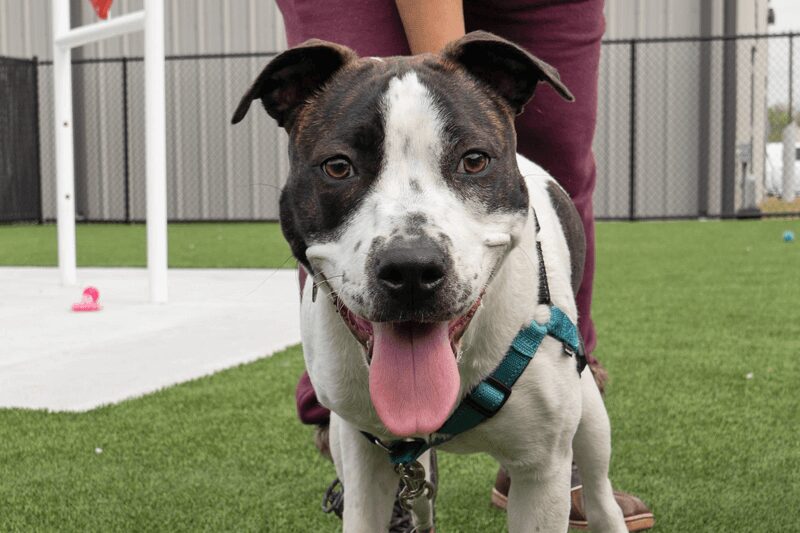
Short Cake is a 10-month-old puppy who has yet to grow into her full stature, but she is never short on love and energy! This happy girl loves everyone she meets, so don’t be surprised if she crawls right into your lap for some snuggles.

Like many puppies, Short Cake is rambunctious and can get over-excited about, well, everything! Life is very exciting through Short Cake’s eyes, so she’ll be sure to show you how fun life can be. She’s currently learning proper manners at the shelter, but she would also greatly benefit from the structure and routine of a dedicated and caring family that can help polish those skills.

Short Cake is interested in other dogs but hasn’t quite gotten the hang of reading their social cues. She would do best with a dog friend of her own size who likes to play but can also help her learn to chill. Dogs often learn from other dogs, so she’ll start to better understand boundaries if another confident pup helps her along. Our Adoptions Team can help facilitate a meet and greet with your current dog(s) to ensure they would be OK with Short Cake’s boundless energy.

Short Cake loves long walks and rough-housing, so her perfect family would be a very active one. Since she has not learned the concept of personal space just yet, she would probably not do well with small children.

May 23, 2023

We know losing your pet is a heart-wrenching experience, but don’t lose hope! Although it may take time to find your pet, there are many things you can do to make it more likely that you’ll be reunited with them. Acting right away will improve the odds of finding them, and here are our best tips to help you:

If your pet has a microchip, make sure the information is up to date, and then contact the microchip company to report your pet as lost. Often, these organizations will send emails to local pet owners about your missing animal.

Search your house and yard meticulously several times a day. Although it may seem unlikely that your pet could be “missing” but still so close to home, they may be physically stuck somewhere or afraid to come out of hiding. The outdoors can be very scary for animals who don’t frequently spend time there! If your lost pet has a favorite toy or treat, try using it to coax them closer.

Many lost pets don’t wander far unless chased away. Walk or drive through your neighborhood slowly, showing neighbors and mail carriers photos of your pet. Animals might be scared when they’re lost and seek out hiding places nearby. Check under shrubs and ask your neighbors to look under their porches, sheds, and garages. Dogs usually look for vacant spaces and leave their hiding spot at night to search for food, while cats don’t typically stray far but find hiding spots that may be harder to locate and access.

Next, contact local shelters, animal control, and veterinary hospitals. Call shelters daily and check their websites regularly to see if your pet shows up.

Use technology to get the word out to as many people as possible. Alert neighbors about your lost pet on sites like NextDoor, apps like Ring, or on lost pet Facebook groups. Email information about your lost pet to friends, coworkers, and family members asking them to forward it to anyone they can. You can even create your own Facebook page for your lost pet and share it across your own social network. We also recommend posting on Petco Love Lost. Using facial recognition software, your pet’s picture is scanned against photos of rescued shelter animals and those reported by people in your area.

Hang flyers near where your pet was lost. Start with a big headline that can be read from far away, like “LOST DOG” or “MISSING CAT,” and use a bright poster board with a good quality, recent photo. Display only the most essential information, such as a description of what your pet looks like, their breed, your contact information, and when and where they were last seen. Try posting at dog parks, pet supply stores, veterinary offices, and high-traffic locations like grocery stores, coffee shops, and restaurants. When possible, hang them at kids’ eye level so children can help, too!

Offering a reward is an option, but you’ll need to protect yourself from scams. Consider it a red flag if someone asks you to wire, Venmo, Cash App, etc. money before you have your pet back in your arms.

If you decide to attempt trapping your pet, you can borrow a trap from local animal welfare organizations or purchase one at a home improvement or pet store. Depending on the location of the trap and the food that you use to entice your pet to get inside, you may trap other animals. You’ll want to check the trap regularly and be prepared to release a wild animal from it if you accidentally trap one.

Remember, identification can be lifesaving. It’s a good idea for all of your pets, even those who are living indoors only, to have a collar and ID tag with contact information. If you microchip your pet, keep in mind that if you move or change your phone number, you need to submit an update right away. Most shelters and veterinarian offices can implant the microchip, and most have the scanners needed to read them. Following these simple steps can make a huge difference in reuniting animals with their loving owners.

May 23, 2023

Cat owners can all relate to the exasperated feeling of finding claw marks all over the new couch or pilling in the area of the carpet that their kitty just loves to tear up. Scratching is a behavior that can trash your interior design aspirations, but for your cat, it’s all part of being a normal and healthy feline. Scratching and kneading help your cat maintain their nails, is an important part of marking their territory, and likely just feels good.

All that said, it’s understandable for pet owners to look for solutions to prevent their cats from destroying furniture. A practice that was common in the past was to declaw cats. No claws, no problem, right?

Unfortunately, declawing is an inhumane practice. Read on to learn why it’s harmful to your cat’s health and about safer alternatives that will make you and your kitty happy while sparing your couch.

Why is declawing harmful and inhumane?

In the past, declawing was a much more popular practice but today, many vets, animal experts, and pet owners are moving away from it because of its negative health and behavior impacts. To truly understand the harm that declawing causes, let’s walk through some basic feline anatomy. Your cat’s claws are attached to his last knuckle. Just like your fingernails, the claws grow back when they are clipped. So, in order to permanently remove the claw, the surgeon has to remove the last knuckle on each of your cat’s toes. As you can imagine, this is an extremely painful and disfiguring procedure. Furthermore, declawing can permanently affect your cat’s ability to walk and can even lead to long-term sensitivity in the paws. Some pet owners report that their declawed cats’ paws are so sensitive that they dislike using the litter box.

But how can I prevent my cat from ruining my furniture?

With a little patience and training, you can divert your cat’s attention away from furniture and toward appropriate targets for scratching. Here are some options for you to try:

  • Distract with scratch pads and posts placed around the areas where kitty likes to scratch.
  • Deter by placing double-sided tape or knobby plastic covering over their favorite spots.
  • Sprinkle catnip over the cat furniture where you do want them to scratch.
  • Trim those nails regularly!
  • Apply soft nail caps (as an added bonus, your cat will look absolutely glamorous).
  • Chill your cat out with pheromone diffusers or collars. If your cat is scratching to be territorial, or is doing so out of stress, this could be the answer to your problems.
May 22, 2023

The 90s are back, and so is the Atlanta’s Cutest Pet Contest! Introducing ATL’s All Star, a new take on the Atlanta Humane Society’s annual calendar competition.

Enter your pet for a chance to win a 90s-style glamour shot and a feature in our 2024 pet calendar, among other fabulous prizes!

Simply submit your favorite photo of your pet and let the voting begin! All contest photos will appear online where the community can vote for who they think will be named ATL’s All Star!

The first 100 entries will receive guaranteed placement in the 2024 calendar, and the top four entries will receive coveted pet-of-the-month placements.

photo contest blog
May 22, 2023

Feline panleukopenia (FP), also called feline distemper or feline parvo, is a highly contagious, life-threatening disease caused by the feline parvovirus. This virus is especially threatening to kittens and elderly cats and attacks by invading cells in their bodies. Once a leading cause of death in cats, it’s a somewhat rare disease today thanks to effective vaccines.

The first signs of the illness include depression, loss of appetite, lethargy, vomiting, diarrhea, nasal discharge, and dehydration. In young kittens, the virus can also damage the brain and eyes. Very sadly, recovery for infected kittens is poor. Older cats have a better chance of survival if targeted treatment is provided early.

Although the odds are against them, cats are very resilient. Most shelters don’t have the resources to care for this illness and have to euthanize these animals as a result, but Atlanta Humane is fortunate to have the ability to care for them. Immediate veterinary treatments greatly increase the chances of survival, and our Shelter Medicine Team works hard to save as many lives as possible. They provide specialized medical care using the most careful protocols and deepest dedication to saving all cats.

Understanding how FP spreads is the first step towards treating it while protecting other animals in a shelter environment. Contact with an infected cat’s body secretions, such as feces, urine, vomit, saliva, and mucus, can spread FP to other animals. While humans do not get this illness, they can be part of its spread. The virus is only shed 1-2 days, but it can survive up to a year in places like bedding and cages. Staff and volunteers handling infected cats adhere to careful hygiene routines and isolate cats who have contracted FP.

No medications are capable of killing the virus, so intensive care is essential. A regimen focuses on correcting dehydration, providing nutrients, and preventing secondary infection. Without such supportive care, up to 90% of cats with FP pass away. If a cat survives for five days, chances for recovery are greatly improved. Thus, there is hope for these struggling cats—especially thanks to immense support and generosity from volunteers and donors dedicated to the health and well-being of all animals.

How can you make a difference? Firstly, prevention is vital to your own cat’s health. Vaccines offer the best protection and are just as important for indoor cats as they are for outdoor cats because the virus is everywhere in the environment. Most young kittens receive their first vaccination between 6 and 8 weeks of age, and follow-up vaccines are given until the kitten is about 16 weeks old. Adult vaccination schedules vary with age. Your fully vaccinated cat should have a lifetime of immunity against panleukopenia. You can also support Atlanta Humane in a variety of ways, such as volunteering, donating physical items, and making one-time or monthly gifts.

May 15, 2023
quesadilla headshot
quesadilla sitting

Meet Quesadilla, a small guy who is loaded with cuteness, not too spicy, and full of flavor! Living in a foster home, Quesadilla has had the opportunity to become comfortable with people and new surroundings. He’s not the stand-offish cat we all know and love; he’s the one that will greet your guests at the door.

Though he may look serious, Quesadilla is a playful cat. He loves to play with his toys and is always up for a treat or snack. Looking for conversation? Quesadilla’s your guy. He loves to talk, and his little noises are nothing but adorable. Do you want a cat to love on and be a part of your family? Because this little grey cutie is looking for a family who will play with him, pet him, and love on him. What’s better than that?

Quesadilla qualifies for Foster First, which means you can foster him for 14 days prior to adoption to ensure he’s the perfect fit for your family! Currently, Quesadilla is in foster so you can learn how to meet him at the link below.

May 15, 2023

Moving from one residence to another can be difficult for people and even more so for a new cat or kitten when they first come to your home. When a cat joins your family, the animal may suspect they have landed somewhere in outer space because everything is unfamiliar and possibly frightening.

You can help your new cat feel welcome and comfortable when you bring them home. Here are the best ways to do that:

  • Provide a safe, limited space for your cat, such as a guest room, home office, or other space that’s separate from the rest of your house. Keep the doors to other rooms closed so the cat won’t feel overwhelmed by the size of their new environment. Make sure that the cat’s space contains no toxic plants, cleaning products, or electric wires that could harm them.
  • Your cat may decide to hide for a few days, or even weeks, while they become accustomed to your home. Be patient with them and give them the time they need to feel comfortable. Spend quiet, short periods with the cat at first. You can read, do quiet hobbies, and enjoy similar calm activities. Be available often enough that the cat can come to you when they’re ready.
  • Show your cat where the essentials, like food, water, and litter boxes, are. Place their litter boxes a good distance away from their eating area. Cats, like people, don’t want to eat near their bathroom. Remember, the recommendation for litter boxes is one for every cat plus one. If you have one cat, they should have two litter boxes.
  • Because cats need to scratch their claws, show them where you want them to scratch, whether that’s on a post, cardboard pads, or sisal rope. Every cat will scratch, so make sure that the activity is done on your terms.
  • During the first few days, feed your cat small amounts of food several times throughout the day so that they become accustomed to receiving good things from you. Always use positive rewards like toys, treats, and gentle praise.
  • Go slow with hugs and cuddles. Let the cat show you that they’re ready to be petted through head bumps and purring. Keep your voice low and try to avoid making loud noises or fast motions until well after they’ve settled in.
  • If you have other pets in your home, wait until your new cat seems comfortable before you introduce them. When your cat has grown confident about their new surroundings, they’ll be more likely to adopt well to other animals. Introductions should be done slowly.
May 10, 2023

Imagine that you and your dog have just returned from a walk through your neighborhood. What’s the first thing you do when you re-enter your house? It should be a thorough check of your dog to see if any ticks have attached themselves to your beloved pet.

Ticks feed on blood from your animal and can carry infections and serious diseases to not only your pet, but also to any other pets in your house (including indoor cats), you, and your family. Ticks find it easy to attach to people and pets by waiting along paths and in grass and low bushes. Ticks hold onto their perch with their lower sets of legs and reach out with their first pair of legs to climb onto warm-blooded animals passing by.

You can help prevent ticks from getting onto your pet by using a veterinarian-recommended tick and flea prevention product, such as a collar, shampoo, or treatment. If you own both dogs and cats, use the proper tick-prevention product for each pet. Do not use dog-specific products on cats and vice versa.

Here’s how to check your pet for ticks:

  • Feel all the fur on your pet to find any little bumpy areas, and check those carefully.
  • Examine inside and outside the ears and lips.
  • Look around the eyelids and under the collar or harness.
  • Examine around the tail, between the back legs, and under the front legs.
  • Finally, check between the toes.
  • As you check your pet for ticks, also look for “flea dirt” or feces—tiny dark spots that will turn red from digested blood when put on a wet paper towel.

If you don’t find a tick, consider your job well done. If you do find a tick, remove it safely by following these steps:

  • Use clean, fine-tipped tweezers to grasp the tick as close to the skin’s surface as possible.
  • Pull upward with steady pressure until the tick releases. Don’t twist or jerk the tweezers, or the tick’s mouth may break off beneath the skin and become infected. If the mouth does come off, remove it with the tweezers.
  • Clean the bite area and your hands with rubbing alcohol or soap and water.
  • Dispose of the tick by placing it in alcohol, placing it in a sealed bag destined for the trash, or flushing it down the toilet.

You can help discourage ticks on your property by removing leaf litter, clearing tall grasses, mowing your lawn frequently, and placing playground equipment, decks, and patios away from yard edges and trees. Also, remove old furniture and trash from your property to prevent ticks from hiding there.

If you have any concerns about ticks being on your pets, please reach out to your veterinarian.

May 9, 2023

For many animals in our care, the shelter environment is not ideal. While we work hard to reduce fear, anxiety, and stress in our animals, some of them experience high levels of stress or have medical issues that require one-on-one care.

Finding long-lasting love can take time, but our foster caregivers provide our animals with safe, loving homes while they wait for their forever families. Atlanta Humane provides all food, supplies, and medical care for our animals in foster homes.

The animals listed below are in the highest need of a foster home. We’ve highlighted some of their specific requirements, but please click through to read more about each animal and then click the button below to let us know you’re interested in fostering. We hope you’ll consider giving one of these special animals a short-term place to stay!

Dogs

foster clyde

Clyde
(OK with dogs; no cats; fospice)

foster penny

Penny
(OK with dogs; cats unknown; no kids; stranger danger; fenced-in yard needed)

finn sitting atlanta humane

Finn
(OK with dogs; no cats; no kids)

diamond

Diamond
(no kids)

joey smiling blog cover

Joey
(only pet; in wheelchair; no stairs)

ms bailey smiling

Ms. Bailey
(OK with dogs)

lilypad smiling

Lilypad
(only pet)

specter

Specter
(OK with dogs)

Cats

lady

Lady
(only pet)

casper

Casper
(OK with cats; no teeth; in dental recovery)

lonzo

Lonzo
(needs another cat; fearful)

lilith

Lilith
(fearful)

bitsy

Bitsy
(only pet; no kids)

May 8, 2023