Close X

Enter a search request and press enter. Press Esc or the X to close.

As pet parents, protecting your pets from disease and sickness is a big concern. Keeping up with annual vaccines and check-ups helps to keep our fluffy friends’ tails wagging, but there’s one important practice that you especially won’t want to miss: heartworm prevention.

What is heartworm disease?
Heartworm disease is a serious disease caused by foot-long worms that live in the heart. These worms can affect dogs, cats, and ferrets, although dogs are their most natural host. If left untreated in dogs, heartworms can reproduce and increase in numbers, causing lasting damage to the heart, lungs, arteries, and quality of life even after the worms are gone. In cats, most heartworms do not survive to the adult stage but if they do, they can also cause respiratory disease.

How does heartworm disease spread?
Mosquito bites are the most common way for this to spread. A mosquito bites an infected animal and takes its blood, picking up microscopic baby worms. When the mosquito finds another animal to bite, the baby worms enter that animal’s bloodstream through the bite. Once inside a host, heartworms can take up to six months to fully mature and can live in a host for up to seven years.

What are the signs of heartworm disease?
Symptoms in dogs usually show once the dog has been infected for a significant amount of time. These symptoms can include weight loss, decreased appetite, fatigue, and a mild, persistent cough. Cat symptoms can vary dramatically, so it’s best to visit your vet if you notice anything “off” about your cat.

How can I protect my pet?
Routine Testing: Testing for heartworms should be included in your annual check-up so that they can be identified sooner rather than later.
Preventative Medicine: The FDA mandates that heartworm preventatives must be prescribed by a veterinarian. Ensure you give your pet their monthly prevention medication.

Visit the American Heartworm Society’s website for more information, and if your pet is exhibiting symptoms or is not on a regular heartworm preventative, contact your veterinarian.

June 20, 2023

Have you noticed your cat having distinctly bad breath? This could be a sign of stomatitis. Stomatitis is a painful oral disease found in cats. It causes severe inflammation of the entire mouth, including the gums inside of the cheeks and the back of the mouth. The bone around the teeth can also become inflamed. Frequently, the pain from this condition can be so severe that your cat will stop eating. In addition to bad breath and refusal to eat, symptoms of this condition include:

  • Bright, red inflamed gums
  • Drooling, sometimes with blood present
  • Pawing
  • Lack of grooming
  • Crying while eating
  • Dropping food from their mouth

Stomatitis is a complex condition that remains a bit of a mystery. Veterinarians believe the primary cause is an overreaction of the immune system to the plaque on the teeth. But while vets are still learning about this condition, it can be managed with medical intervention. The first approach will be a dental cleaning. If the condition does not resolve quickly or returns, a partial or full-mouth extraction will likely be the next step. While this may seem extreme, 90% of cats show complete resolution of their symptoms. There is no cure for stomatitis and there are no medications or alternate treatments to aid with this condition.

If diagnosed, the cat should receive treatment as soon as possible. Left untreated, your cat’s pain will be severe and relentless, and their quality of life will be drastically impacted. After a treatment plan has been established, your veterinarian will walk you through the next steps and a recovery plan. Once the mouth has completely healed, you should see an immediate improvement in the attitude and appetite of your cat.

June 19, 2023

Has your cat quit using the litter box? Does she participate in destructive scratching? Maybe he yowls nonstop? These are three of the most common unwanted behaviors cat owners experience. Let’s take a look at possible causes and how you can address these issues:

Eliminating outside the litter box. Unfortunately, eliminating outside of the litter box is not an issue with a straightforward solution. There could be several reasons that this is happening, including:

  • Issues with the box or litter themselves
  • Dissatisfaction with the placement or number of boxes
  • Environmental changes in or out of the home
  • Undiagnosed medical conditions

Take time to think about the possible causes. Have you recently changed the litter box or has a new cat been introduced in the house? The cat may no longer feel there are enough litter boxes, or he could be stressed about the new change. Finding the cause will be a process of elimination. If none of these have occurred, there may be a recent medical condition contributing to this unwanted behavior. It is best to take the cat to the vet for a checkup and ensure he is not suffering from a medical situation.

This particular behavior may take time to figure out, but don’t ever scold your cat for eliminating outside of the litter box. Instead, be patient and persistent. Once you have identified what the cause is, it will be fairly easy to get the cat back on track with healthy litter box usage.

Destructive scratching. All cat owners know that cats love to scratch. It’s built into their DNA. So while you can’t prevent cats from scratching, there are steps you can take to help them learn the right things to scratch. First, make sure your cat has enough cat-scratching items. There is no shortage of products in stores, and you may have to test a few in order to determine what your cat enjoys. Second, make your furniture a deterrent. You can start off trying aluminum foil. Most cats hate aluminum foil and will avoid it. If your cat likes to scratch the edge of the sofa, try covering it in aluminum foil. Chances are he will avoid this area and will learn to leave it alone. There are also a lot of options on the market, from protectant tape and to scratch guards, that will help to protect your furniture, doors, and carpet. In addition, these products will act as a deterrent. Lastly, redirect your cat when you catch him in the act of scratching. Simply tell him no, pick him up gently, and place him on one of his scratching posts. When you see your cat using his appropriate scratching posts, reward him. With repetition and persistence, he will begin to gravitate towards his scratching posts.

An important note about destructive scratching: Declawing your cat should never be an option. Declawing is the amputation of bone in the paws that also removes the claws. What many owners don’t know is that declawing often creates irreversible and lifelong consequences that result in more issues than what you started with. Try working with a vet or a behaviorist if you are unable to resolve a scratching issue.

Yowling. Is your cat constantly yowling? More than likely, your cat simply wants attention. To tackle this problem, wait for your cat to stop yowling. During that moment of silence, immediately give your cat the attention she is craving. If she yowls again, walk away and only give her attention again when she is quiet. If the yowling is at night and you know all her needs have been taken care of, completely ignore the behavior. She will eventually learn that no amount of noise will get her more attention. Lastly, don’t discount a possible medical condition. If yowling is a new behavior and constant, she may be in pain. Check with the vet to ensure the yowling is not being caused by a medical condition.

June 16, 2023

If you’re a dog or cat person, you probably know what would happen if we left grooming entirely up to them. For dogs, they’d stink to high heavens. The more mud they could roll in, the better! Baths?! Heck no! As for cats, they quietly groom themselves (to the tune of 25 percent of their lives!) for a variety of reasons, including keeping their coat clean, regulating body temperature, and distributing beneficial oil across their skin. But whether we humans bathe our pets or our pets groom themselves, keeping them clean and well-groomed is key to their longevity.

Let’s start with the basics: brushing. With long-haired dogs and cats, brushing is especially important. If your pet gets matted fur occasionally, it’s easily managed with a few snips or a gentle brushing. But extensive matting can, at the least, cause discomfort and infections, and can even lead to painful sores. The best way to prevent mats, which can hide parasites like fleas, is frequent brushing. If it’s shedding season (typically during a change in the season when they go from a thin coat to a thick coat and vice versa), you should brush more often. Brush in the direction the fur grows, and brush a dog’s coat from the bottom up – start at the feet and work your way up the legs to the torso and so on. Long or curly coats should be brushed frequently. If you aren’t sure what brush is best for your pet, talk to your vet or the friendly folks at your neighborhood pet store. There are so many options, including undercoat rakes, rotating pin combs, slicker brushes, rubber curry combs, de-shedding brushes, shedding blade brushes, and more. If you find brushing to be a challenge depending on your pet’s coat, look at after-bath detangling conditioners to help break up the fur.

Speaking of baths, all cats and dogs are different so there’s not one easy answer as to how often you should bathe them. A good rule of thumb is once a month for dogs or, frankly, when they need it. Is their fur getting more oily and a little stinky? Did they take a run through a muddy creek? These are all good reasons! And the same rule goes for cats even though they are far more conscientious about their own cleanliness. If your cat is doing a great job at maintaining their own fur, you don’t need to bathe them. Sometimes, baths cause stress that isn’t worth it! But no matter what you decide about timing, make sure you don’t forget the ears! While you should avoid getting water in your pet’s ears, make sure to check for dark wax or excess moisture that could be a sign of infection. If you don’t see signs of infection that prompt a vet visit, there are over-the-counter pet-safe ear cleaners that you can use at home.

Bathing also gives you an opportunity to really take a close look at your pet’s coat. Look carefully for fleas, hot spots, petechiae (a sign of internal bleeding), skin allergy symptoms, and more. All of these issues should be reviewed by a vet.

Grooming your pets includes more than just brushing and bathing. Pet owners also need to keep an eye on their nails. Dogs that are regularly walked on pavement sometimes take care of their own nails as the pavement serves as a natural nail file. But don’t forget those dew claws! They don’t come into contact with the pavement so they tend to grown unchecked. As for cats, keep their nails trimmed so they aren’t sharpening them on the curtains and sofa! Your local pet store also has a myriad of options to keep nails in tip-top shape, such as trimmers, clippers, and grinders. If your pet’s nails are light, you can see the “quick” and know to avoid cutting too close. But if your pet’s nails are dark, it can be a guessing game that may make a vet or grooming appointment worthwhile so that you avoid hurting your pet.

Grooming your pet is a great way to spend time together, but more importantly, it’s an excellent tool to keep them healthy and happy!

June 15, 2023

The journey to a well-adjusted and well-trained dog starts with puppyhood. If you’ve brought home a new puppy, you can start socializing her right away to help her get used to all the new people, sights, sounds, and smells she will encounter in her life. Read on to learn a gentle and thoughtful approach to socializing puppies.

When do I start socializing?

It’s never too early to start socializing your puppy. Experts say that the critical time period for socialization is between 3-12 weeks of age. During this period, pleasurable, neutral, and traumatic stimuli can make a lifelong impact on your dog. For very young pups, you can start with gentle handling and the sound of your voice to help them get used to life with their human families. As your puppy develops and begins exploring her surroundings, you can add new toys and sounds (for example, the vacuum or radio) to her environment and provide positive reinforcement so she knows they’re safe.

If your puppy is older than 12 weeks, don’t despair! You can and should still work on socialization exercises. It may take a little more work to build trust and undo negative associations, but positive reinforcement with treats and toys, plus gradual desensitization, can work.

Go slow and steady.

The key to success with puppy socialization is to go slow and steady rather than throwing everything at your pup at once. Consistency is also important. If something, like the sound of the hair dryer, seems to scare your pup a lot, you can dial back the intensity of the sound and give positive reinforcement to help your puppy overcome her fear. For example, turn on the hair dryer in the other room with the door shut. Then, after your puppy tolerates that, try opening the door. After that, you can try turning it on in the same room as your puppy.

Invite your friends over!

Introducing your pet to new people of all ages, genders, and race can help your puppy grow into a confident and people-friendly dog. You can start doing this very early on but, of course, do it slowly and make sure to supervise young children.

When should I introduce my puppy to other animals?

It’s very important that your puppy has been vaccinated before she interacts with other dogs, and that the dogs she meets are also fully up to date on their vaccines. Typically, a puppy’s vaccine schedule will be complete by 12 months.

The reason why you should be careful about introducing your puppy to other dogs is that young animals without proper immunization can become very ill from infections like distemper and parvovirus. You should avoid taking your puppy to the dog park and letting her get too close to other stranger dogs you meet when you’re out on a walk. Experts also recommend against letting your puppy walk outside without a leash for this reason. Talk to your vet about when it will be safe for your puppy to have broader exposure to other dogs.

Nevertheless, socializing your puppy with other dogs is something you should start early in life as long as it is with a dog who you know is healthy and fully vaccinated. It’s also important to make the meeting as smooth and friendly as possible. A negative experience with a growly or aggressive dog can cause your puppy to become fearful of others.

Similar principles apply to introducing your pup to other animals, like cats. Always keep a close eye when animals are meeting for the first time and be prepared to intervene if the encounter gets heated.

What other experiences should I let my puppy have?

If you’ve ever heard of a friend’s dog who has an intense phobia of going to the vet, hearing thunder, or perhaps hates anyone wearing a hat, you know that dogs can develop strange aversions to things that we view as totally normal. Showing your puppy early on that these are neutral or even positive things will help her live in less fear.

Here is a handy checklist you can reference to get an idea of all the different experiences you can introduce to your puppy so she is prepared to take on the world around her.

June 14, 2023

We all want to keep our beloved pets happy and healthy, so we offer them good food, comfortable places to sleep, and a huge supply of our love. But on top of this, we can improve our pets’ lives by neutering them before they start to reproduce. Here are the best reasons why spaying females and neutering males is essential.

When you neuter your pet, you are reducing their risks of health issues. Intact male dogs and cats can develop testicular cancer and diseases of the prostate gland. Non-spayed females can develop potentially fatal infections, cysts, and cancers of the ovaries, uterus, and breasts. Not suffering from these conditions will allow your pet to enjoy a much happier – and longer– life. A University of Georgia study of more than 70,000 animals found that, compared to the lives of non-neutered animals, the life expectancy of neutered male dogs was 14% longer and of spayed female dogs was 26% longer.

Neutering your pets can also eliminate the production of hormones that encourage intact animals to roam in search of a mate. Free-roaming dogs and cats are at high risk for injuries resulting from vehicles and other animals.

Neutering can enhance your pet’s life by helping them to feel more relaxed. An intact dog or cat may be aggressive to other animals, vocalize loudly for a mate, and spray urine to mark territory outside and inside the owner’s home. When your dog or cat isn’t worried about finding a mate, they can remain calm and focus their attention and affection on their human family.

You will save money by neutering your pet because you won’t incur the expense of caring for litters of accidental puppies and kittens. The expense of veterinary care before and after pregnancy is much higher than the cost of spaying or neutering your pet. Neutering also costs less than the price you may pay if your non-neutered pet roams in search of a mate, fights with other animals, or destroys property.

Perhaps you’ve heard that neutering an animal will make it fat, but that idea is a myth! If your neutered pet continues to eat appropriate amounts and exercise daily, they will not gain weight from the surgery. Overfeeding and lack of exercise may pack on the pounds, but neutering alone does not increase your pet’s weight.

So make sure your pet has the best chance of a good life by having them neutered or spayed, ideally when they are young. Then you can look forward to enjoying many rewarding years with your dog or cat!

June 12, 2023

Crate training is something that all dog owners should consider doing, even for the most well-behaved dogs who are free to roam in the house. Why? Well, this can best be explained through one of our volunteers and her dog, Cooper.

When traveling with their dog Cooper, they have a set routine: arrive at the destination, go on a short walk for a potty break, fill up his water bowl, and then set up his crate in an out-of-the-fray but easily accessible location, usually near their own bed.

Cooper, for his part, pees, laps up some water, enters his crate, spins around a few times to make sure everything is to his liking, and then joins our volunteer wherever they happen to be to supervise any human shenanigans.

While some pet owners worry that a crate is a prison of sorts, Cooper clearly views his crate as his own private sanctuary — a great escape, if you will.

Over the years, visiting family for noisy holiday celebrations or going on weekend trips to the mountains, Cooper used his crate as a get-away when he had had enough of the laughter and kids running around or simply needed a nap after a strenuous hike. Many evenings, he would disappear and “put himself to bed” in the crate to the delight of his owner’s friends.

In addition to the benefits Cooper obviously derived from his crate, it can be an effective tool to help with house-training your puppy or dog and prevent destructive behavior when you are not around. It can also prepare your dog for the day they may need to be crated for travel or after a vet visit that requires rest and recuperation. Already being accustomed to a crate will make these last two occasions less stressful for your pet and you.

With all the advantages of crate training, it’s important to note the exceptions. First and foremost, a crate should NEVER be used as a form of punishment. The goal is for the crate to be a safe, comfortable, and even happy location for your pet. Using it to punish your dog with solitary confinement will undermine this goal and confuse your pet.

A crate is also not a substitution for good general training – being stuck in a crate all day will NOT somehow miraculously teach your dog what is acceptable behavior or to not potty in the house.

Last, there are dogs who suffer from a medical condition called separation anxiety. It can be quite severe and crating these dogs can even result in them hurting themselves in an attempt to get out.

Signs of separation anxiety include: nervously pacing or following you around as you get ready to leave the house, excessive salivating, whining, and trying to leave with you. Your pet may also begin barking incessantly immediately or shortly after you leave and become destructive, often by trying to “escape” at doors and windows.

If you are attempting to crate train your dog and they exhibit signs of separation anxiety, you should immediately stop and get professional help from a vet or trainer to determine if they have separation anxiety and the best way to proceed from there.

Now that we know what a crate is and is not good for, how do you go about selecting the right one for your dog?

Size matters. A crate should comfortably allow the full-grown adult version of your dog to stand up, turn around, and lay down on their side with legs extended. It should not, however, be so large as to allow your puppy to sleep in one end and poop or pee in the other. That means that 10-pound puppy of yours that is going to be an 80-pound adult will need a crate that can grow with them. You can either use a divider to adjust a larger crate or buy a new crate as they grow.

Style matters. You should consider how you will primarily be using the crate when you decide on the style. As mentioned above, Cooper was a traveling man. They rarely left home without him, so the best style of crate for him was a soft-sided (canvas) one with a collapsible metal frame that could be easily packed and transported. Soft-sided crates are not as sturdy or durable as a wire crate, however, and some dogs do figure out how to un-zip them.

If you plan to set up your crate and leave it in one location at home, you might prefer a wire frame. They tend to be the most durable and the easiest to clean. They are also the heaviest and therefore a little more cumbersome to set up and take down as well as being the most exposed for your dog. To offset this last feature and give your dog a little privacy for a snooze, you can drape a towel or light cover over one end of the crate. Just be sure to allow for plenty of ventilation.

Plastic travel crates are fairly lightweight and can meet cargo requirements for plane travel. They tend to be the most enclosed and dark.

There are also wooden crates that look more aesthetically pleasing and mimic a piece of furniture. Similar to wire crates, you probably don’t want to set them up and take them down frequently as they are heavy and require assembly. Your dog will be styling in a wooden crate but they can also come with a hefty price tag.

Now that you have your dog’s new crate, how do you convince them it is their happy place?

  1. Start slow. This is a gradual, repetitive process just like all training. It’s going to take time and loving patience.
  2. Leave the crate open in the early stages. The idea is to get your dog comfortable with walking in and out of the crate unimpeded.
  3. If your dog is food motivated, throw or place yummy treats just inside the crate. If they are play motivated, you can use a favorite toy. When they poke their head in to get the reward, praise them. This helps them associate the crate with good things. And then repeat it! As they get more comfortable, move the treat or toy farther back in the crate. You can also place their food bowl in the crate in the same manner.
  4. Once they have become comfortable going in and out of the crate without hesitation, start closing the door for a minute or two when they are inside. Having a favorite chew toy while they are inside can be helpful.
  5. Gradually increase the time they are inside with the gate shut. You can also leave the room for a minute or two. Giving them a Kong or other puzzle toy stuffed with treats or frozen peanut butter to keep them occupied can help make the crate experience positive.

With patience, positive reinforcement, and repetition, your dog may come to love their new crate!

Here are some final tips to make your dog’s crate experience the best:

  • Remove your dog’s collar while they are in the crate. It can become snagged on the frame and choke or cause pain to your dog.
  • If your dog doesn’t tend to chew on fabric, place a bed or blanket in the crate so they can be extra comfy.
  • Do not place a crate in direct sunlight. It can get hot, especially if slightly covered, and your pet has no escape. They can become overheated or develop heat stroke.
  • If you leave your pet in the crate for extended periods during the day, always provide water just as you would if they had free roaming privileges in the house. There are water bowls that attach to wire crates if you are concerned they will knock the bowl over.
  • Do not leave your pet in a crate for over 4 hours except at night, when they and you are sleeping. As mentioned previously, crates should not be used to dole out solitary confinement. Dogs are social and need interaction with others and exercise to stay mentally and physically healthy. If you leave them crated while you are at work all day, have someone come to let them out for a break or do it yourself. Mid-day visits with your pet can be incredible up-lifting mental breaks!
  • It is OK if your pet sleeps in the crate at night. But for puppies, keep in mind that their little bladders will need to be relieved every few hours. Keep the crate near you as you sleep so you can hear them when they whine. This is their signal to you that they need to go out. They don’t want to soil their beds, so don’t force them to. Take them out as needed until they can sleep through the night. This guidance also pertains to older dogs that may have less control over their bladders and bowels as they age.

June 9, 2023

Our animals are vibin’ while they wait to find their summer loves this weekend. Thanks to our friends at PNC, adoption fees are $0 for all in-shelter animals* between now and June 11!

We’ve got animals to match all of your summer vibes, including sprinkler-splashing pups, air-conditioning enthusiasts, and “trust me, the trail is this way” hiking buddies.

View Adoptable Animals

*Animals in foster homes do not qualify for this promotion.

$0 adoption promo blog
June 8, 2023
keke ribbon toy
keke headshot
keke sitting between bookcases

At 7 years of age, Keke is no digital neophyte. This Cat TV, cat video, interactive gaming gal can hang with any digital native and may even squish up behind you in your desk chair as you work to be close to the action. Multidimensional in her play, she’s just as happy with old-school wand toys and food puzzles as long as there is a challenge or something to chase.

As an independent spirit, Kiki likes to call the shots. And we can’t blame her! She was brought to Atlanta Humane as a Hurricane Ian evacuee, so she’s been through the wringer. She’ll let you know when she does and doesn’t want to be petted, so she would do best in a forever home that doesn’t have small children or other cats in case they don’t pick up on her signals. That said, give her a soft bed or comfortable couch and she will happily spend hours curled up beside her favorite human, mesmerizing them with her beautiful emerald eyes.

If you are ready to “interact” with the digital diva Keke, game on! Click below to fill out a pre-adoption application to set up a meet and greet.  Keke also qualifies for our Foster First Program, which means you can take her home for two weeks prior to finalizing her adoption to ensure she’s a good fit for your lifestyle.

June 7, 2023
ruby sleeping on couch
ruby sitting
ruby in cat tree

Have you ever wondered just how to bring a new cat into the home when you already have a dog or a cat? We’ve got the answer, and it’s Ruby!

Ruby is a friendly, quiet, sweet, and petite cat who gets along with both dogs and cats. She’d love to be the newest member of your family! And she wouldn’t mind being an only cat if you’re just looking for one purrfect furry friend.

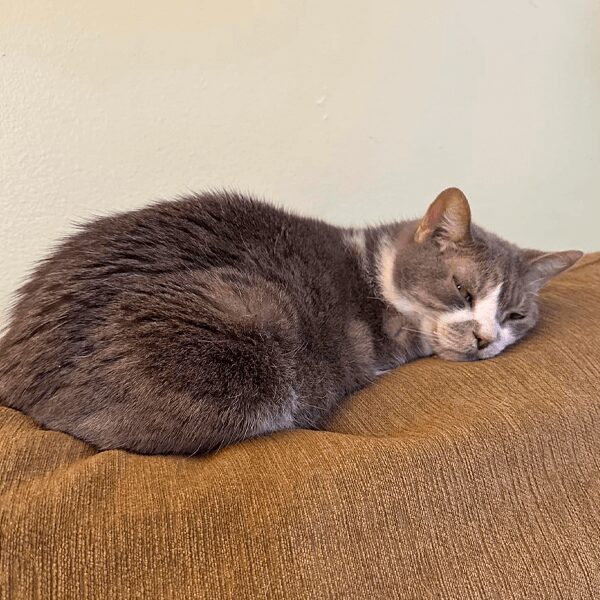
This gray and white lady may have a bit of a grumpy face when you first see her, but she’s one of the sweetest cats we know. At seven years old, she’s learned the ropes and has a few stories to tell. She’s very charming and likes nothing more than to snuggle in some soft blankets or join you in some bird watching from the window. Cat naps are a real thing to Ruby, and they’re even better when she’s by your side.

She’ll easily fall into a daily routine as she loves a yummy treat and is a pro at using her litter box. We have to say it; Ruby is quite the gem, and we know she’ll embed her little self into your heart.

If you’re looking for a new feline friend, Ruby’s your girl. Whether you already have a dog, cat, both, or no one, she’ll fit right in! If you want to see it to believe it, Ruby qualifies for our Foster First Program. This means you can take her home for up to 14 days prior to finalizing adoption to ensure she’s the perfect fit for your family.

June 6, 2023