Close X

Enter a search request and press enter. Press Esc or the X to close.

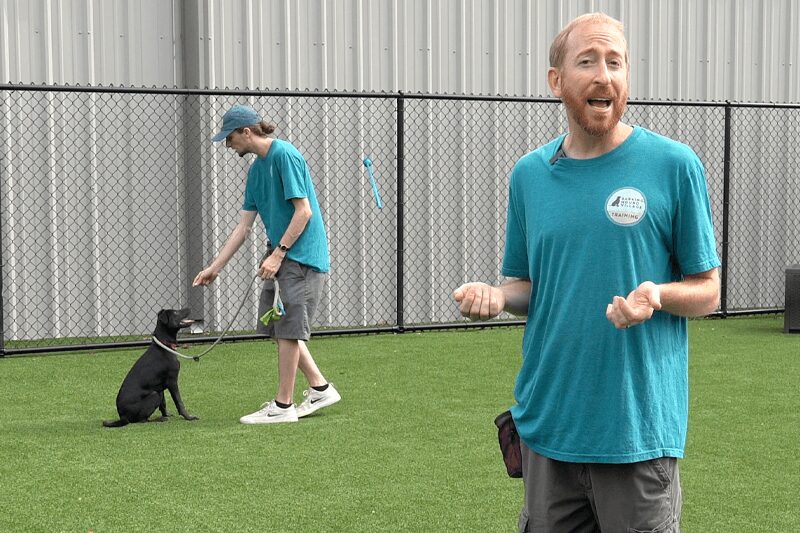
We’ve partnered with Barking Hound Village to provide training resources for pet owners who need assistance. Learn more about preventing rude behavior in your dog by watching the video and reading the training guide below.
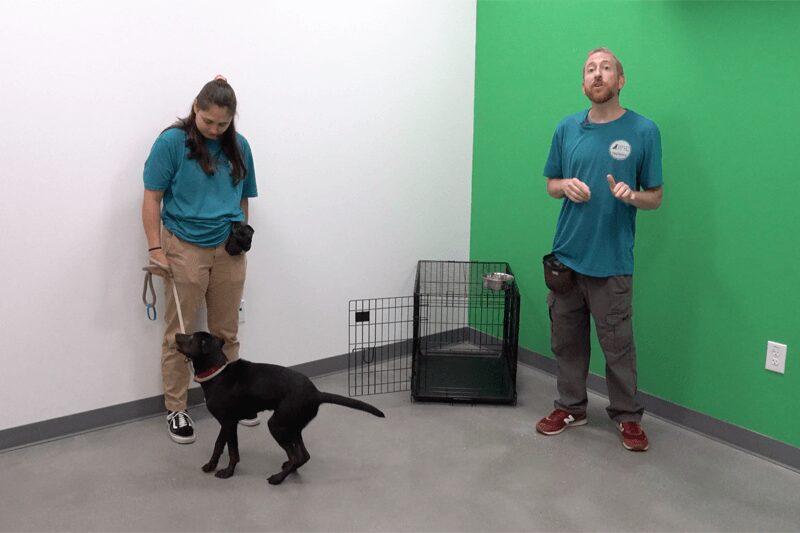
bhv crate training

Properly introducing a crate to a new puppy can serve many important functions. A crate is a crucial part of potty training, helping new puppy parents prevent inside bathroom accidents. It can act as a safe place where a dog can retreat to when they’re fearful or nervous, like during fireworks, a thunderstorm, or when a few particularly loud friends are over. A crate can help prevent puppy chewing, saving your couch and loafers. And it can also act as a happy place where energetic puppies learn to calm down and settle.

Start by choosing an ideal spot in your home for the crate. It should be away from the action, not in the center of the living room. Keep in mind that dogs prefer a wall to a window. They don’t want a view, they want security. It can also be helpful to set up a noise machine or speaker nearby to play calming music when you need to cover up external sounds, like the aforementioned fireworks, thunder, or boisterous friends.

When you first introduce your dog to the crate, make it magic! Put some treats in the crate when your dog is not around and then bring them over to let them explore. When your dog discovers the treats in the crate, they’ll think they magically appeared and associate the fun with the crate!

Try feeding your dog in the crate. If they’re still a little wary, put the food just inside the door so your dog only has to stick their head in to eat. Over time, slowly move the food to the back of the crate and, eventually, close the door while they eat.

Practice short, happy crate experiences. Put your dog in the crate and give them a safe, yummy, and long-lasting distraction like a frozen Kong toy with peanut butter. After a few minutes, BEFORE they’re finished with the distraction, open the crate door and give them the option to come out if they want. Your goal is for the entire experience to be a positive one, from going in and closing the door to opening it again.

If you want to teach your dog a verbal cue to go in the crate, gently hold their collar and toss a few treats in the crate. Say your verbal cue and then let go, allowing them to go in and get the treats. For at least the first few weeks, you should ALWAYS give your dog a treat for going into the crate.

Keep in mind that well-exercised and tired dogs will take to the crate better than those full of energy. When you’re building the time your dog stays in the crate, make sure to take them for a nice long walk beforehand or play with them to get some of their energy out.

Finally, if your dog is really fearful of the crate, they may have crate anxiety. If the above tips don’t alleviate the anxiety, it’s important to enlist the services of a qualified trainer to help modify a training program for your specific dog. Check out Barking Hound Village for more information, or contact them at (404)-369-2014 or [email protected] to set up a session!
November 14, 2023
zephyr couch
zephyr sitting
zephyr at water

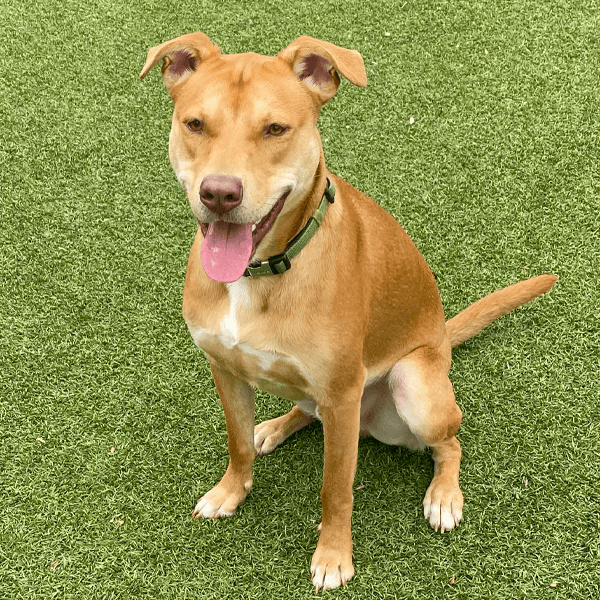
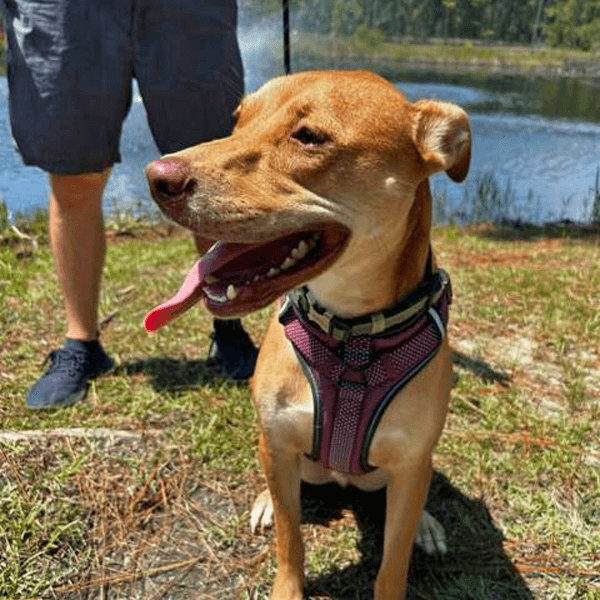
Say hello to Zephyr, our social butterfly who can’t wait to find his forever home!

This young boy is a ball of energy and ready to bring boundless joy to your life. Meeting new people is one of his favorite things, and he gets along with people of all kinds. He’s met children under 10 and got along great with them, but he’s also been a great companion to elderly people. As long as you share his zest for life, Zephyr will fit in perfectly with you.

Besides people, Zephyr also adores other dogs. He wants to meet and play with as many as possible. He makes fast friends and even when the other dog is slow to open up, Zephyr still has a great time. He’s also been interested in cats, but he’s been cautious around them since he doesn’t quite know what to make of them!

Zephyr is looking for a family who can match his energy level. Although he knows when it’s time to settle down and enjoy pets on the couch, he loves playing with toys and is hoping to find a family that will take him on long walks. He’s been an excellent running and hiking companion and can’t wait to go on even more adventures. But don’t expect him to jump in the pool or river with you—Zephyr isn’t a big fan of water. He also doesn’t like to be separated from his favorite humans.

Interested in learning more about this goofy boy? Click below for his full profile.

November 8, 2023

What happens when you have allergies but still long to be a pet parent? Can you do it? Or maybe someone else in your home is allergic, but you all want the love and companionship of a dog or a cat. The good news is some solutions are available to make this work!

The first thing to consider is how allergic you or your family member is. If these allergies are life-threatening, then bringing a dog or cat into your home wouldn’t be safe. However, if the allergies are tolerable, you can probably manage to have a happy home complete with a furry friend.

What causes allergies?
As you’re learning about the severity of your allergy, it’s important to understand what it is that you are allergic to. Typically, allergy-causing proteins in a dog or cat’s saliva and skin glands get on their fur and dander and then spread around your home. This is why a dog that sheds less is a better choice for someone with allergies. However, it’s important to know that there is no dog or cat completely who is completely non-allergenic. Many experts believe that the hypoallergenic dog is a legend but if animals shed less, there’s less hair and dander to trigger allergies.

Are there dogs that shed more or less than others?
It’s hard to say which dogs shed less, but people often think that curly-haired dogs with tighter coats, such as poodles, Airedale terriers, and Cairn terriers, shed less. You’ll want to be careful with designer breeds like labradoodles and goldendoodles because golden retrievers and Labrador retrievers are some of the most prolific shedders around. Dogs like huskies, German shepherds, and Great Pyrenees are also known to be heavy-duty shedders.

What about cats?
As for cats, those with shorter fur will spread less hair and dander around. The more they’re in the sun, the more likely they are to shed. It’s important to know that shedding is a normal part of their body function, but brushing your cats regularly can help contain it.

Can you reduce shedding?
Yes, there are a few things you can do to help control your animal’s shedding:

  • Make sure to feed your dog or cat a nutrient and protein-rich diet to keep their skin and fur healthy. Talk to your vet about adding olive oil or fish oil to their diet to ensure they receive healthy Omega-3s.
  • Groom and brush them. If you take your dog outside to brush them, all that unwanted will stay outside rather than all around your house. Brushing your cat will help, too.
  • As tempting as it is, don’t let your pet sleep in your bed, and make sure to wash bedding frequently.
  • A good Hepa vacuum will help get more of the allergens out of your home, and remember to vacuum and dust regularly.
  • Wood floors are better than carpets for controlling allergies because carpets trap allergens.
  • Speak to your doctor about possible medications for you or your family member.

The bottom line is that anytime you bring a pet into your home, you have the risk of triggering allergies. Be careful of getting an “allergy-free” or “hypoallergenic” pet thinking you’ll be completely free of issues, but there are ways to control and live with allergies if you long to have a pet in your life. Speak with your doctor, do your research, and invest in a good vacuum and pet brush and it may just be possible to have that sweet dog or loving cat in your family.

November 7, 2023

We’ve partnered with Barking Hound Village to provide training resources for pet owners who need assistance. Learn more about preventing rude behavior in your dog by watching the video and reading the training guide below.


bhv potty training video

Potty training is the first thing new puppy parents ask trainers about. And with good reason! It’s no fun cleaning up potty accidents inside, especially on the brand-new carpet. Fortunately, with attention to detail and consistency, most puppies should be able to be potty trained in a timely manner.

Dogs learn to use the bathroom outside when they imprint on textured, outside surfaces like grass, pine straw, and mulch. They’re not learning “inside bad, outside good.” They physiologically associate going to the bathroom with only these specific surfaces.

In order to get a dog to imprint outside, your goal is to get them to use the bathroom on these outside surfaces thirty to forty times in a row, with no inside accidents. That means the MOST important thing when potty training your puppy is prevention. Consistently prevent your dog from using the bathroom inside and they will easily learn to only go outside.

Now, you may be saying to yourself, if I knew how to prevent my dog from pooping on the rug, I would have done so already! Fear not, here are 5 crucial prevention tips to help.

  • Crate training is a vital part of potty training. Most dogs do not want to use the bathroom in a space where they lay and will do their best to hold it. When you can’t watch your dog–when you’re sleeping at night,  leave them home alone, or jump in the shower–you should put them in the crate.
  • Always keep an eye on your puppy when they’re out of the crate. Treat them like a baby without a diaper, which you would never let out of your sight, even for a second. Use a leash and baby gates to keep them close. Watch for visual cues indicating that your puppy may need to use the bathroom, like sniffing a particular spot, circle sniffing, or walking towards the door that leads to the outside.
  • Remember, when things go in, they’re eventually going to come out. Set a timer after your puppy eats to make sure you give them an opportunity to go outside before they need to use the bathroom. If they drink a lot of water in one sitting, like after a long walk, bring them back outside within five minutes as their full bladder will need to empty quickly.
  • Know WHERE and WHEN your dog tends to have accidents inside. Block off common accident areas. Pay extra attention to your puppy during common accident times or put them in the crate until you can. If you can identify specific patterns, it’s far easier to prevent accidents in the future.
  • One of the most common times a puppy has an accident inside is after they were outside when they DIDN’T use the bathroom at all. If you think your puppy needs to use the bathroom and they don’t when you bring them out, keep them on a leash for a few minutes when you come back inside (or put them in the crate) and then take them outside again. The world is a very distracting place and sometimes puppies forget they need to go!

And don’t forget to reward your puppy with praise and a treat the moment they finish eliminating outside. Dogs have a half-second learning window, meaning you need to reward them immediately after they use the bathroom. Going back inside and then giving them a treat has no connection to what happened outside.

Along those lines, never, ever, ever punish or scold your dog for having a bathroom accident inside. Even if it happened two seconds earlier, they only know you’re upset, not why. And it doesn’t matter if you catch them in the act. You won’t teach them they shouldn’t use the bathroom inside by yelling, just that they shouldn’t do it when you’re nearby. All they’ll learn is to sneak off and do it when you’re not looking. Instead, ask yourself how you could have prevented the accident, and do a better job next time. With patience, consistency, and good attention to detail, you can set your puppy up for potty training success!

If you’re struggling with potty training, Barking Hound Village can help! With private, one-on-one training sessions at your home, group training classes at 3 locations around metro-Atlanta, including the West Midtown Atlanta Humane Society location, and a 2-week intensive Board-and-Train program, Barking Hound Village has the perfect training service to fit your exact needs. Visit their website or contact them at (404)-369-2014 or [email protected].

October 24, 2023
honey at vet
honey smiling at remedy
honey with tech at vet

Every animal deserves quality, compassionate care. But when pet owners fall on hard times and face financial difficulty, finding affordable and accessible veterinary care can be a challenge.

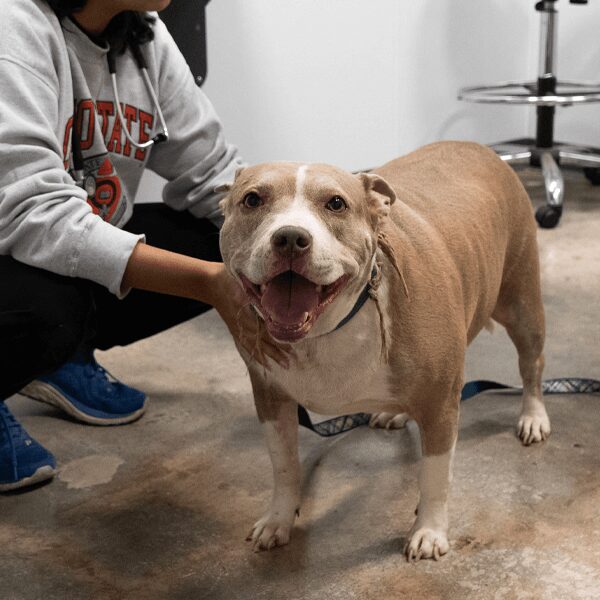
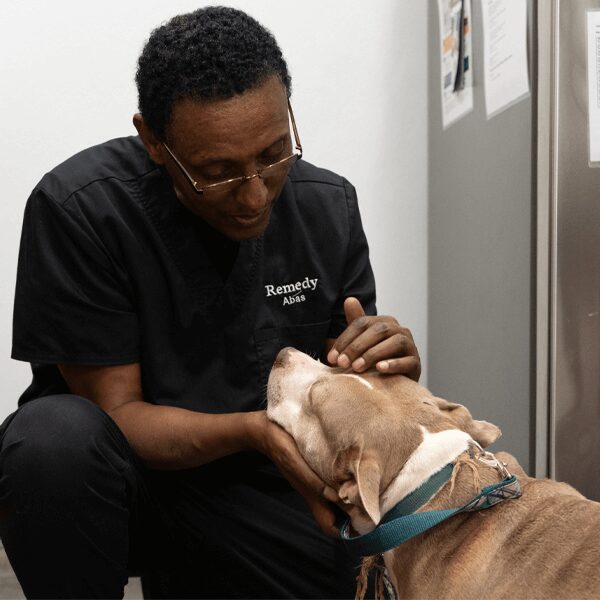
At Remedy: Your Community Vet, Atlanta Humane’s affordable veterinary practice, we don’t compromise on compassion. So when Ms. Goodwin needed help with her 7 dogs, including Honey (above), our team stepped in.

Through our Healthy Pets program funded by VCA Animal Hospitals, we were able to provide financial aid and low-cost veterinary care to a family in need. Supporting long-lasting and loving relationships between pets and the people who love them is so important to our team at Remedy. You can learn more about Remedy and our accessible services at the link below.

October 23, 2023
rescue me warehouse video

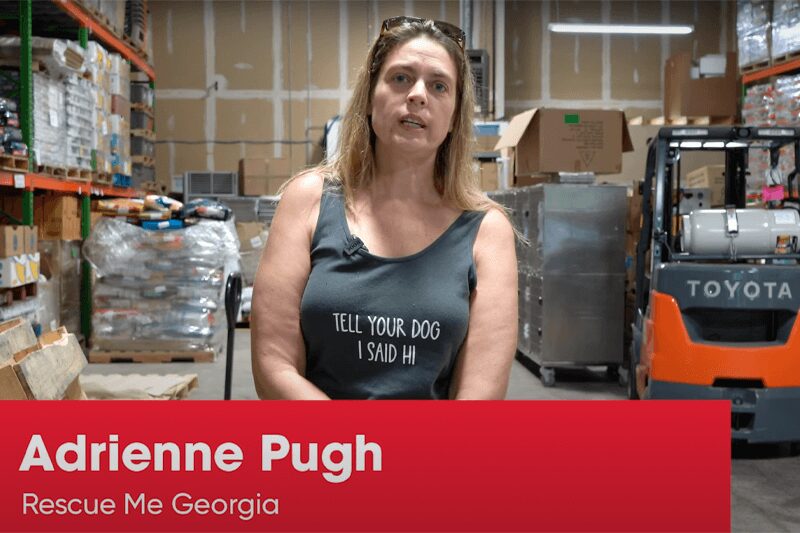
Our Community Outreach Team works to identify areas of need within the community and ensure that resources are available to those people and animals who need them. Part of their work involves collaborating with other organizations that are helping to progress animal welfare within the city. Throughout the year, our team hosts organizations at our distribution warehouse, where they can pull resources, including food, litter, toys, and more, to disperse amongst their own teams.

Recently, Rescue Me Georgia visited our warehouse to collect donations for their shelter. As an organization that not only pulls animals from other shelters in metro Atlanta but also takes in owner surrenders, Rescue Me Georgia is able to utilize more financial resources for veterinary care when they receive supply donations from us.

We’re grateful to our partner organizations who work alongside us and help to improve the lives of so many animals within our community.

October 19, 2023
athena in window
athena profile
athena in bag

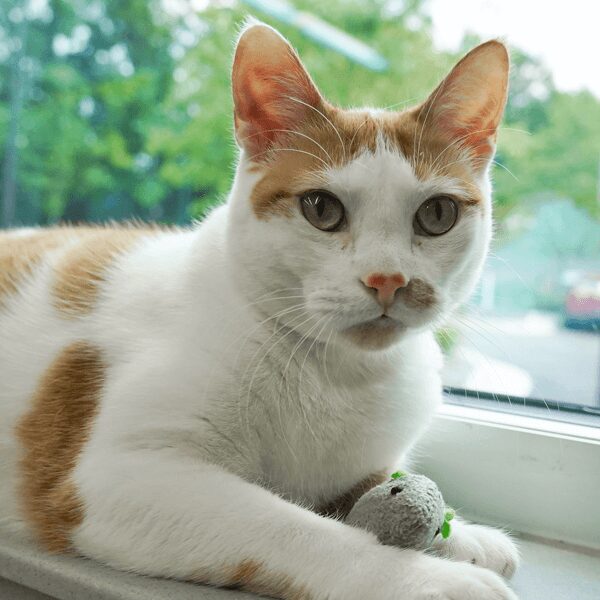
First, she’s sour. Then, she’s … slightly less sour?

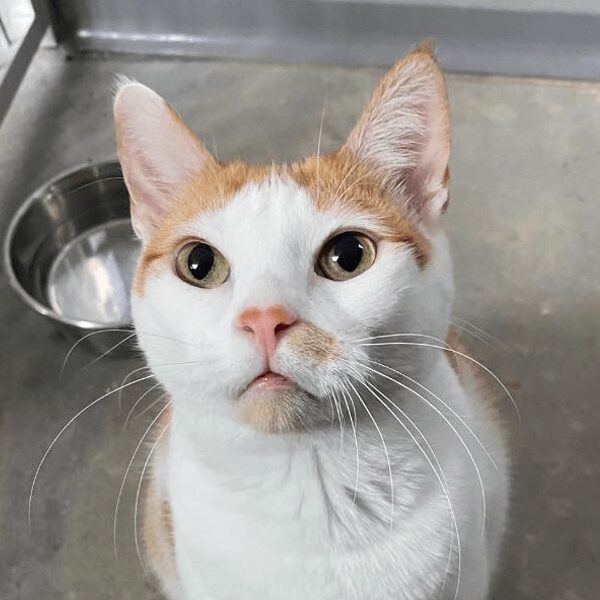
We’ll be honest: Athena isn’t your regular, easygoing house cat. She may not even be a house cat at all! Athena has firm boundaries and isn’t shy about telling you when you’ve crossed them. Yes, she occasionally seeks out affection from humans, but don’t expect to pick her up for a snuggle session or disturb her afternoon nap. Coexisting from a distance is the name of the game, and Athena is a pro.

So who would be the perfect forever family for this Sour Patch Kid™? One with a rodent problem that needs top-notch pest control! If you’ve got an indoor/outdoor space, such as a barn, Athena would love to spend her days exploring, patrolling, and not being bothered by pesky humans.

If you don’t mind a little spice and could benefit from a critter patrol officer, stop by our Atlanta location to meet Athena! Our team of Adoption Counselors are ready to answer all of your questions.

October 19, 2023

The Gary W. Rollins Foundation is the first investor in the program that will provide temporary pet housing for those in domestic abuse situations, hospitalized veterans, the homeless, and more.

Pets are family, and the Atlanta Humane Society will be able to launch its Pets in Crisis Support Program to support both pets and their people in times of crisis, thanks to a transformational gift from The Gary W. Rollins Foundation. This groundbreaking initiative is aimed at addressing the unique challenges faced by individuals and families who are forced to choose between their own needs and the well-being of their beloved pets during times of crisis.

The Pets in Crisis Support Program will support situations where people and their pets have been displaced due to evictions, hospitalization, domestic violence, natural disasters, or medical emergencies such as hospitalizations. It will offer the resources to bridge the gap between pet parents and the support they need during these challenging times. This generous gift from The Gary W. Rollins Foundation has provided a launch pad to begin formal work on the program and begin to build this much-needed service.

“We are honored to support the Atlanta Humane Society’s Pets in Crisis Support Program,” said Kathleen Rollins of The Gary W. Rollins Foundation. “Pets are cherished members of our families, and The Gary W. Rollins Foundation recognizes the critical need to help individuals and families facing crisis keep their pets close during these challenging times.”

This program comes in response to a pressing need in the community and across the state of Georgia. According to Ahimsa House, 52% of their clients report that the abuser threatened to hurt their pets, and 60% reported that their abuser did mistreat their pets in some way- with more than half delaying seeking safety out of concern for their pet’s safety if they were to leave them. And with rising evictions, almost eight million pets in the United States were estimated to face losing their homes in recent years.

“We believe that pets are family, and in times of crisis, no one should have to choose between their own safety and the well-being of their beloved animals,” said Cal Morgan, President and CEO of the Atlanta Humane Society. “Thanks to the generous support from The Gary W. Rollins Foundation, we are proud to launch our Pets In-Crisis Support Program. Our mission is to keep families together and provide the support needed for both pets and their people during their most challenging moments. We are committed to being a leader in the Southeast and to creating lasting change by working collaboratively with our partners.”

The Gary W. Rollins Foundation’s generous gift will enable the Atlanta Humane Society to collaborate with organizations like Ahimsa House, which focuses on pet fostering for domestic violence survivors, and Paws Between Homes, which provides pet fostering for individuals facing homelessness due to evictions, to increase capacity to care for animals in need. Additionally, Atlanta Humane will expand its foster family network to assist veterans with pets referred by social workers at the Atlanta VA Medical Center in Decatur, providing temporary pet care during their treatment.

Gastric dilatation and volvulus (GDV) is a life-threatening disorder most commonly seen in large, deep-chested dogs, although any dog may develop GDV. The disorder develops without warning and can progress very quickly.

If not treated, GDV is almost always fatal. However, you can take steps to help protect your dog from GDV.

This serious disorder has two stages: gastric dilatation, known as bloat, and volvulus. In the bloat stage, the dog’s stomach fills with gas. If the bloat progresses into volvulus, the gas-, fluid-, and food-filled stomach twists upon itself so that both the entrance and the exit of the stomach are blocked.

A dog that becomes bloated but does not develop volvulus can normally be treated non-surgically. However, when volvulus develops, only urgent, immediate surgery can save the dog’s life. The pressure on the stomach wall and internal organs must be reduced as soon as possible. Shock treatment must begin immediately, using intravenous fluids and emergency medications. Once the dog becomes stable, surgical correction of the GDV must be performed. It may be necessary to delay this major abdominal surgery until the dog is able to undergo anesthesia.

What causes GDV? The exact cause is still unknown. Some of the risk factors that can produce bloat include the following:

  • Overeating, eating quickly, or exercising after a large amount of food or water
  • Eating from a raised food bowl
  • Eating only one meal a day
  • Eating moistened dry food, particularly if citric acid is used as a preservative
  • Anxiety and stress, sometimes as a result of environments like boarding kennels
  • Increased age over 7 years
  • Genetic factors
  • Illness that decreases intestinal motion

How can you tell that your dog is experiencing GDV? Common symptoms include pacing, excessive drooling, retching or attempting to vomit with no success, panting or rapid breathing, and an overall appearance of distress.

In addition, the dog’s stomach may be swollen, especially on the left side. The dog may appear to be in pain and may whine or cry. As the enlarged stomach presses on the diaphragm, the dog may have trouble breathing. If the stomach presses on the large abdominal blood vessels, the dog’s circulation is compromised. Without treatment, the dog collapses, is unable to stand up, and is likely to die.

Some dog breeds that seem predisposed to GDV include Great Danes, Saint Bernards, Weimaraners, Irish Setters, Standard Poodles, Basset Hounds, Doberman Pinschers, and Old English Sheepdogs. However, any dog can develop bloat, even small dogs like Dachshunds and Chihuahuas. Dogs weighing over 100 pounds have an approximately 20% risk of bloat during their lifetime.

Of course you want to know how you can prevent your dog from developing GDV. The most effective way to prevent it is gastropexy, which is a surgical attachment of the stomach to the body wall so that the stomach cannot flip. In high-risk breeds, some veterinarians recommend performing prophylactic (preventative) gastropexy at the time of spay or neuter. Although gastropexy does not prevent bloat, it does prevent twisting (volvulus) in most cases.

If your dog does develop GDV, a gastropexy can be performed during the surgical procedure to protect the dog from volvulus if bloat occurs again. The success rate of gastropexy in preventing the recurrence of GDV is 95%.

Besides gastropexy, you can help decrease your dog’s risk of GDV by taking these steps:

  • Feed your dog two or more meals a day
  • Feed a dry food containing a calcium-rich meat meal in the first four ingredients of the food
  • Add canned dog food to your dog’s diet
  • Delay exercise until several hours after your dog has eaten
  • Help your dog remain relaxed and calm
October 17, 2023